HackRF - Common Use Cases
09/01/2024
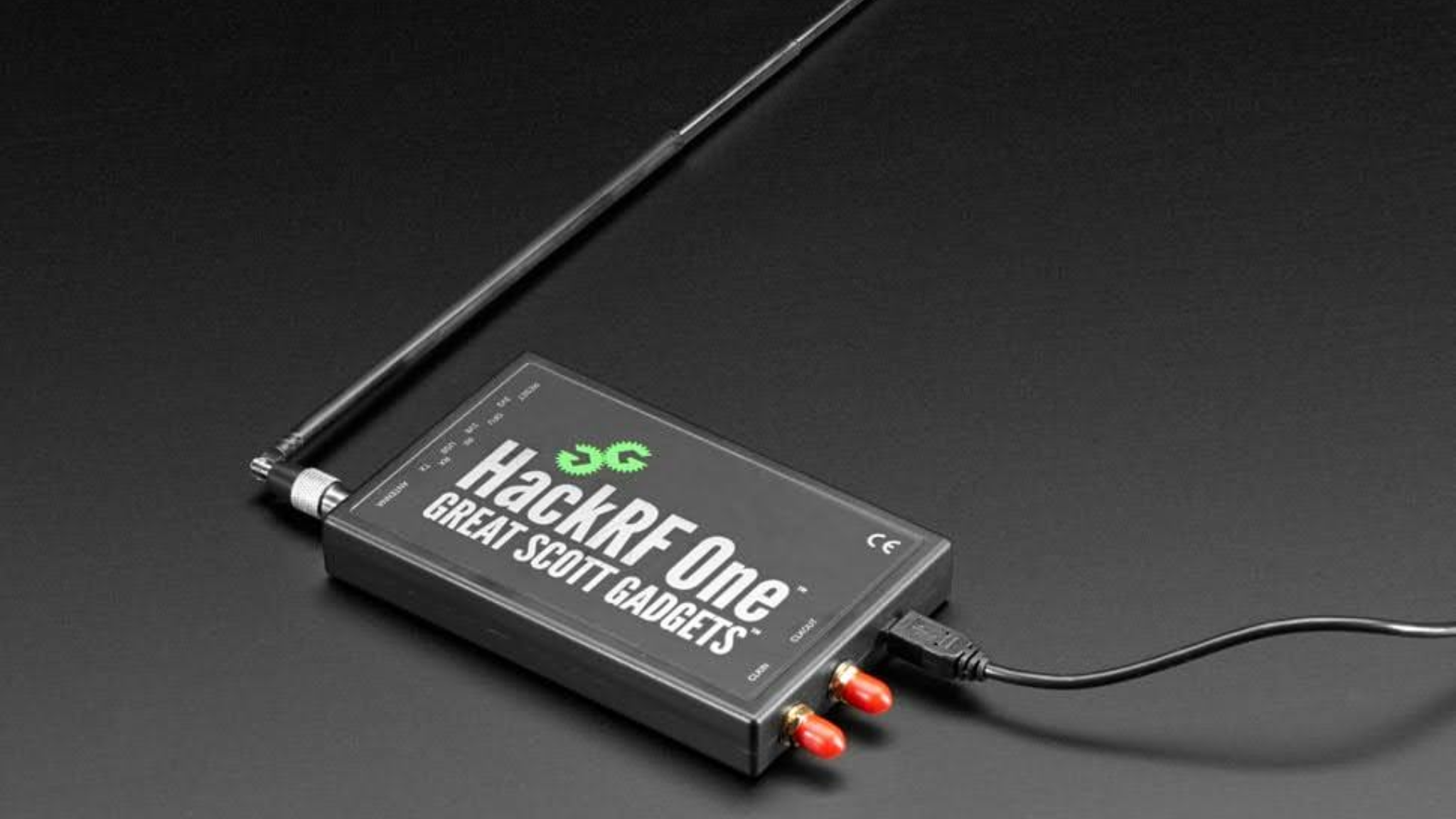
Tell me about HackRF One
Well the HackRF One SDR is the most popular SDR devices on the market. The term SDR stands for 'Software Defined Radio' and it is used to aggregate radio communication systems that implement in software instead of hardware the components in charge of modulating and demodulating radio signals. The idea is to have a device that is able to receive and transmit different radio protocols just by configuring its software
Among the things that make the HackRF One so popular are its ability to receive and transmit radio in the 1Mhz to 6GHz range, its compatibility with Open-Source software such as GNU-Radio, having a notable community, well written documentation and its 'low' price.
Things like having such a wide range of operating frequency allows this device to be used with RF-emitting devices that can go from key fobs (which usually operate in the 300-450Mhz freq. range) to much more impressive things like monitoring SpaceX 🚀 rocket launches.
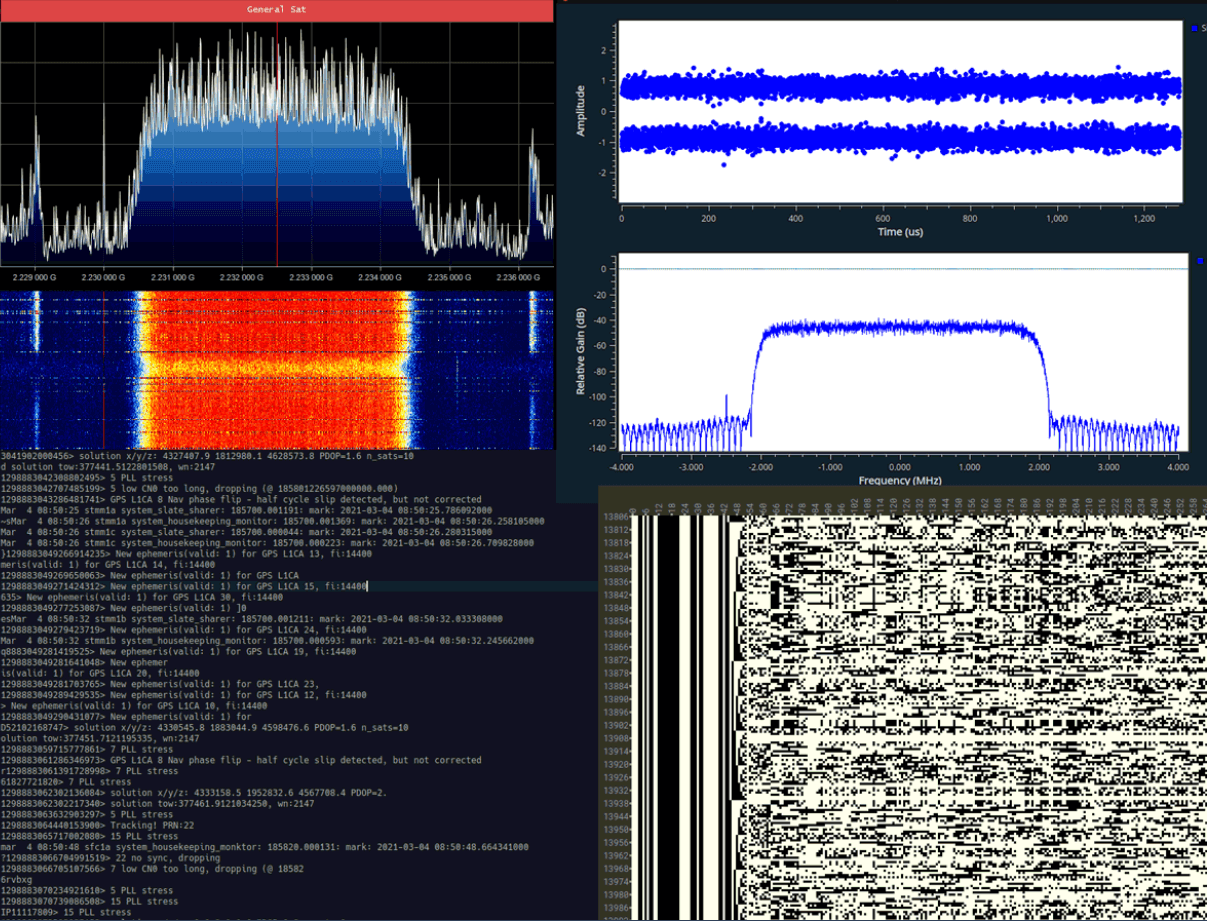
*Figure : https://hackaday.com/2021/03/11/monitor-spacex-rocket-launches-with-software-defined-radio/
Common Use Cases
So, come on and address the elephant in the room. What are these things really used for? Well, for the average user, SDR devices are capable of doing tons of different kind of things like amateur radio usage to communicate with your friends (be wary of local regulation regarding transmitting RF!), building your own GSM network or even listening to your favorite radio station.
When it comes to cyber security researching, devices like the HackRF One can be used to reverse engineer RF protocols that are being used all around us be it LTE or a simple RF protocol used in a garage key fob. While being a fun exercise, this can become a challenging task depending on the chosen protocol due to the fact that in order to get to the actual data someone would need to first find the signal, tune it, demodulate it, get the bits, deframe them and make sense out the resulting data. There are plenty of simple examples of RF reverse engineering projects on the internet for everyone to grasp the basics of RF and getting started with reversing using SDR devices. Now what to do when the protocol has successfully been reversed? Well, the sky is the limit! The functionality of the original device can be recreated to create your own client of the protocol or even improved by removing artificial limits imposed by the manufacturer to restrict features present in their higher end products.
How is it used by cyber criminals?
Cyber criminals are also known to use devices like the HackRF One (usually combined with accessories like the Portapack) to perform a wide variety of attacks such as "Jamming attacks" where the attacker emits noise to block the reception of a signal, "Replay attacks" where a signal is recorded and replayed without the original source device, "GPS spoofing" or even "Side channel attacks" that allow an attacker to remotely monitor what is being displayed on a monitor of a victim.
Needed Software
The HackRF One can be used in both Windows and Linux with widely available and well-maintained software. In the windows side of things, all that is needed to get started is is #SDR
In Linux, installing the driver packages is necessary to get the tools to communicate with the HackRF One. This can be done in Debian based distributions by simply installing using $ sudo apt install hackrf package. Now to use the device to receive and record RF signals, Gqrx is the open-source SDR# equivalent in Linux and it is also present in the Debian repos.
Going back to the main goal behind SDR devices, we talked about the idea of being able to receive and transmit different RF protocols with a single device just by configuring its software. Well, the programs that we just talked about only allow a set of predefined actions and configurations to be performed but, What about interacting with radio frequencies in a more programming-oriented way? This is where GNU-radio comes in. GNU Radio is an Open Source SDK that provides signal processing blocks that can be combined and interconnected in a graphical manner thus simplifying creating programs that work with RF.
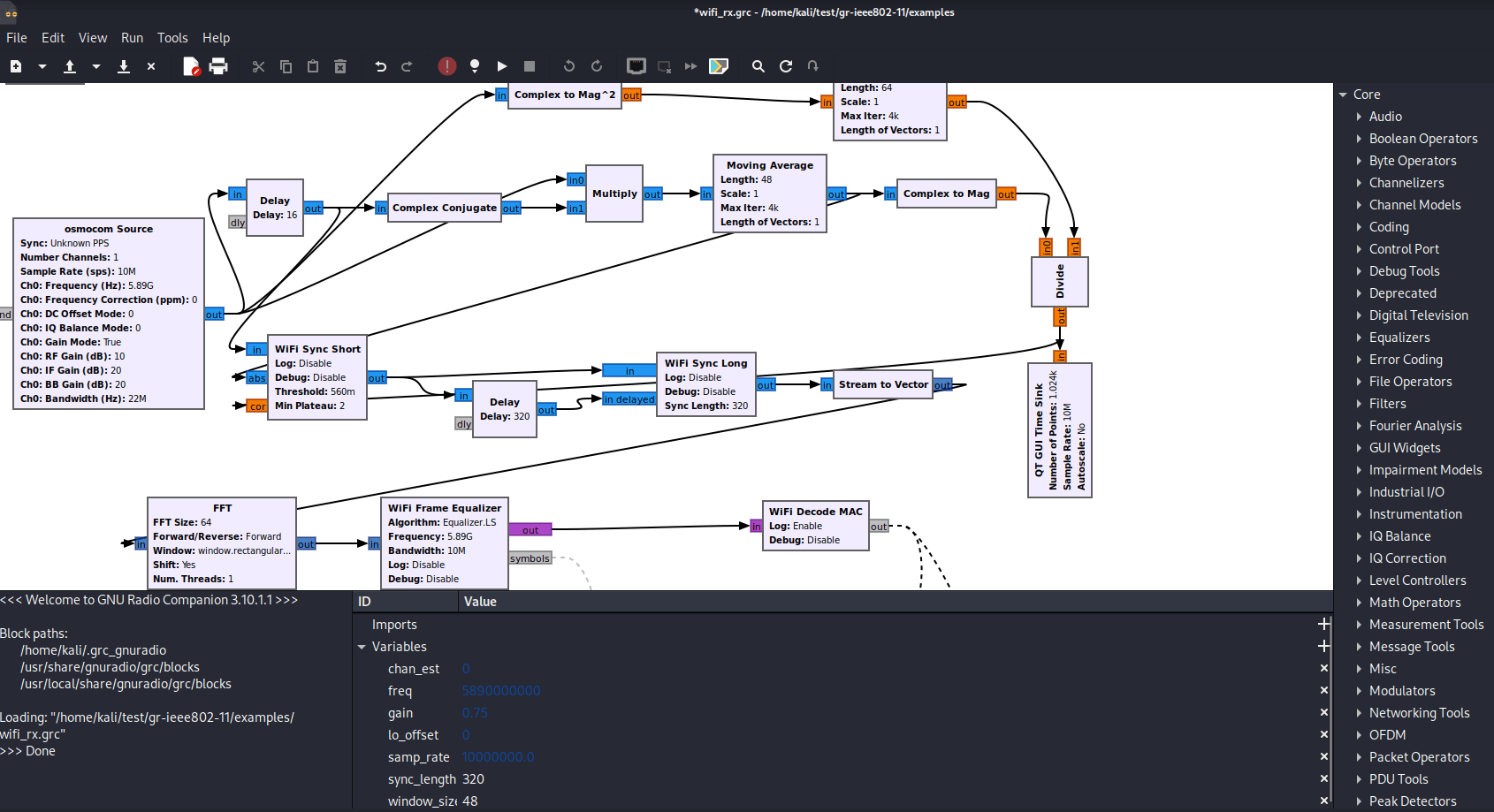
*Figure : GNU Radio project example to capture Wifi packets
How can this improve the quality of our evaluations?
There is no doubt that a product is as secure as its weakest link. Security measures implemented at a higher level can be rendered useless by existing low-level attacks such as the one we discussed above and it is clear that effort should also be put into protecting components and its communications at a lower level.
Being able to add an SDR device to the catalog of tools that the evaluation team at jtsec has as its disposal allows us to perform more exhaustive testing on communication fo the product communications to ensure that the highest levels of security are met.
Thoughts?
Drop a comment below - it'll show up here once I read it.